If you have searched for a modern alternative to traditional cable or satellite television, you have probably come across the term IPTV. But what is IPTV, how does it work, and what do you actually need to watch television over an internet connection?
IPTV stands for Internet Protocol Television. It is a method of delivering television programming and video content using Internet Protocol (IP) networks rather than relying exclusively on traditional terrestrial broadcast, satellite or cable transmission. IPTV can support live television, video on demand (VOD), catch-up programming and other interactive television features.
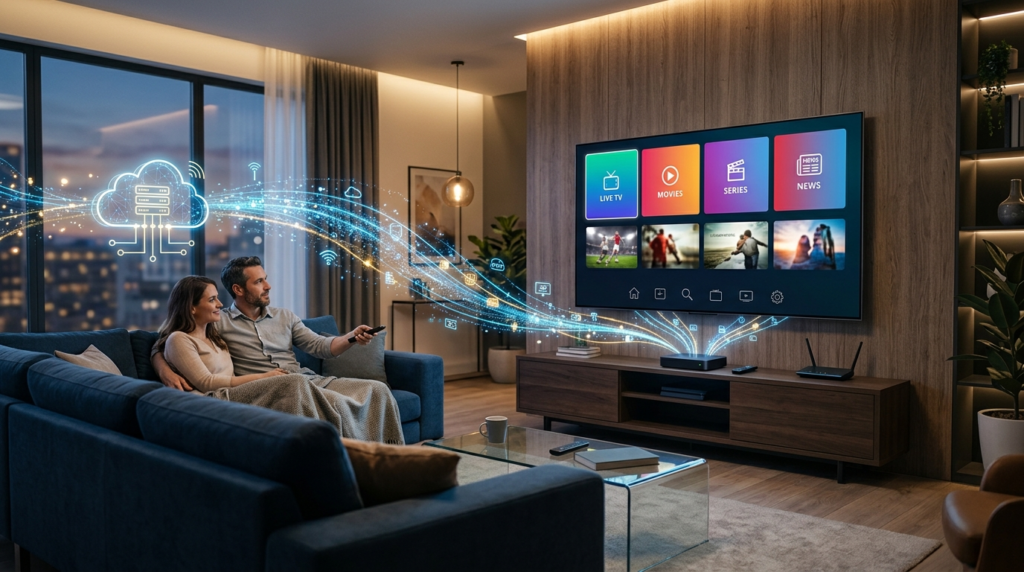
In simple terms, IPTV changes the way television reaches your screen. Instead of receiving a traditional broadcast signal, compatible content is delivered as data over an IP network and displayed on a television, streaming device, computer, smartphone or another supported device.
This guide explains what IPTV is, how IPTV works, the different types of IPTV, what equipment you need, IPTV versus traditional television, IPTV versus OTT streaming, internet requirements, advantages and disadvantages, and what to consider when choosing an IPTV service.
If you are specifically interested in watching IPTV on a Firestick, you can also explore the Firestick IPTV Subscription options available on our website.
What Is IPTV?
IPTV, or Internet Protocol Television, is television delivered through an IP-based network.
The important part of the definition is “Internet Protocol.” IP is a standard used to transmit data across packet-switched networks. NIST describes Internet Protocol as a standard protocol for transmitting data between sources and destinations across packet-switched networks.
Traditional television delivery uses technologies such as terrestrial broadcasting, satellite transmission or cable networks. IPTV instead uses IP networking to transport television and video data.
According to the International Telecommunication Union (ITU), IPTV encompasses multimedia services delivered over managed IP-based networks with requirements relating to quality of service, security, reliability and interactivity.
That means IPTV is more than simply watching a video on a website. IPTV can be designed as a complete television delivery system with features such as:
- Live television channels
- Video on demand
- Electronic program guides
- Catch-up television
- Time-shifted viewing
- Interactive television features
- Multiple devices and screens
- High-definition and 4K video, where supported
The exact features available depend on the IPTV provider, network, application and content package.
How Does IPTV Work?
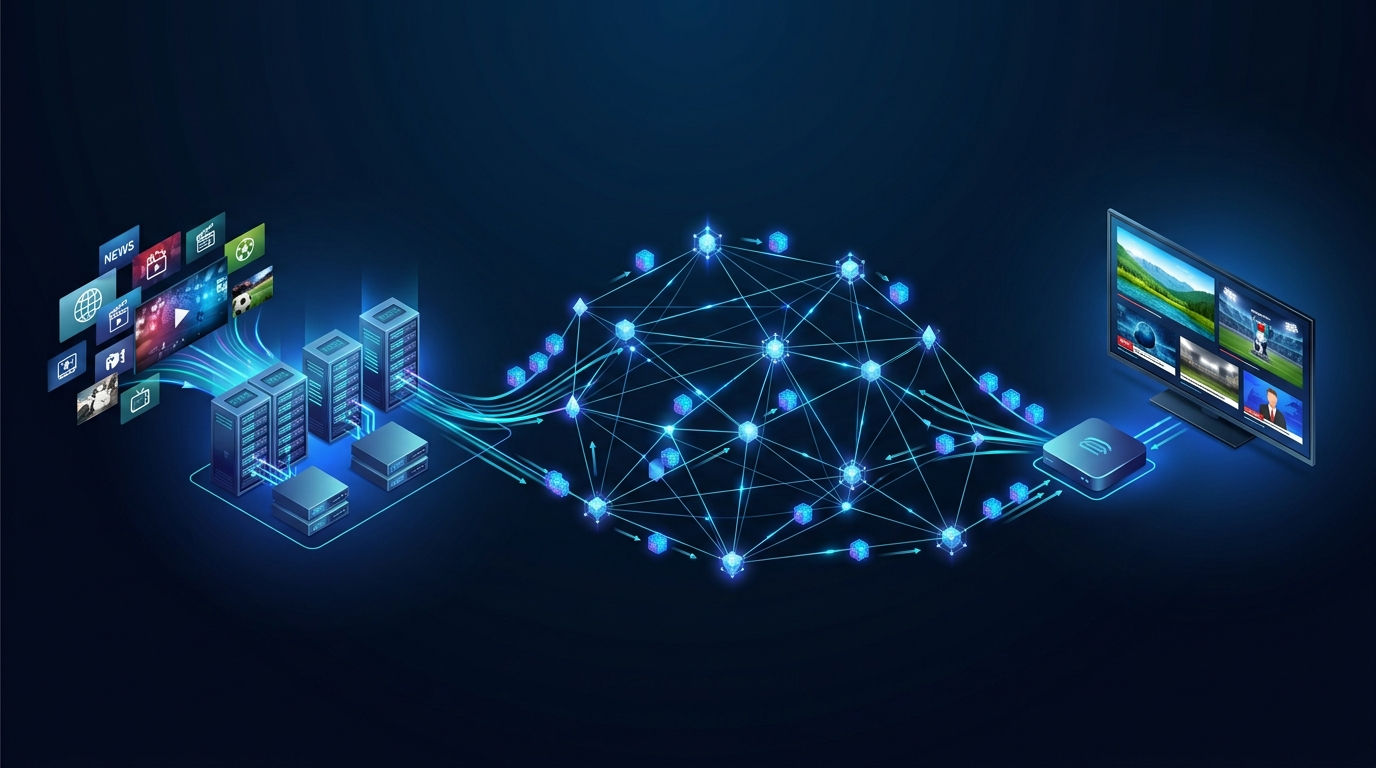
To understand how IPTV works, it helps to think of television as a stream of digital data.
With traditional broadcasting, a television station transmits a signal using a particular broadcast infrastructure. Your television receives that signal and decodes it.
With IPTV, video is encoded and transported through an IP network. Your IPTV-compatible application or device receives the stream and converts the data into the video and audio you see on screen.
A simplified IPTV process looks like this:
Content source → IPTV platform/server → IP network → internet or managed network → IPTV app/device → television screen
The technical implementation can vary significantly between providers.
1. Content is prepared for streaming.
Television channels, movies and other video content must first be encoded into digital formats suitable for transmission.
Video compression is important because uncompressed video would require enormous amounts of bandwidth. Modern video codecs allow providers to deliver high-quality video while keeping data requirements manageable.
2. The content is delivered through an IP network.
The encoded content is transmitted through an IP-based network.
Some IPTV systems operate through managed networks controlled by telecommunications or internet providers. In these environments, the provider can have greater control over network traffic and quality of service.
Other services may use internet-based delivery that is accessible across ordinary broadband connections.
3. Your device receives the stream.
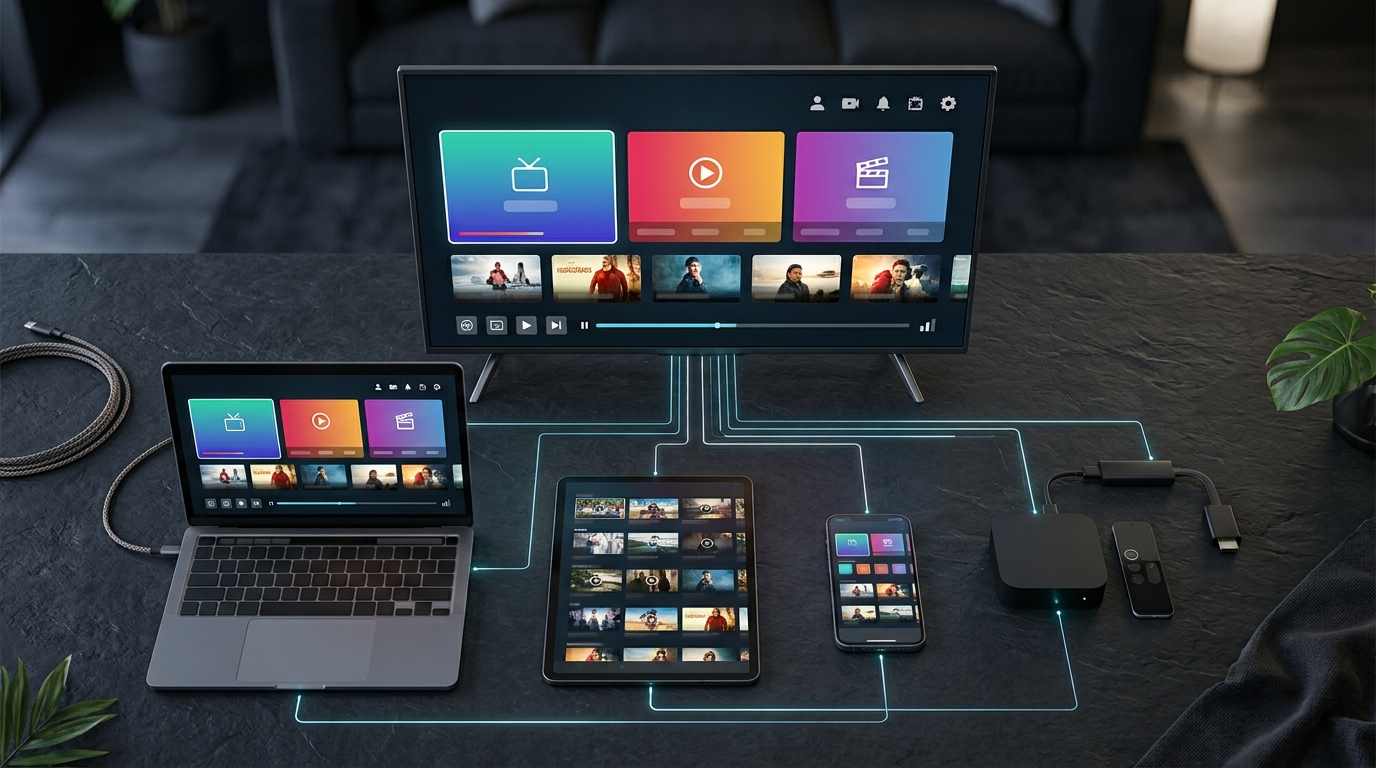
The stream can be received by a dedicated set-top box, smart TV application, streaming device, computer, smartphone or another compatible device.
Your device then processes the incoming data and displays the video.
4. You select what you want to watch.
One of the major differences between IPTV and conventional broadcasting is the potential for more interactive viewing.
Depending on the service, you may be able to select a live channel, start an on-demand program, rewind supported content, access a program guide, or watch catch-up television.
IPTV therefore combines television programming with many of the interactive capabilities associated with digital networks.
What Are the Main Types of IPTV?
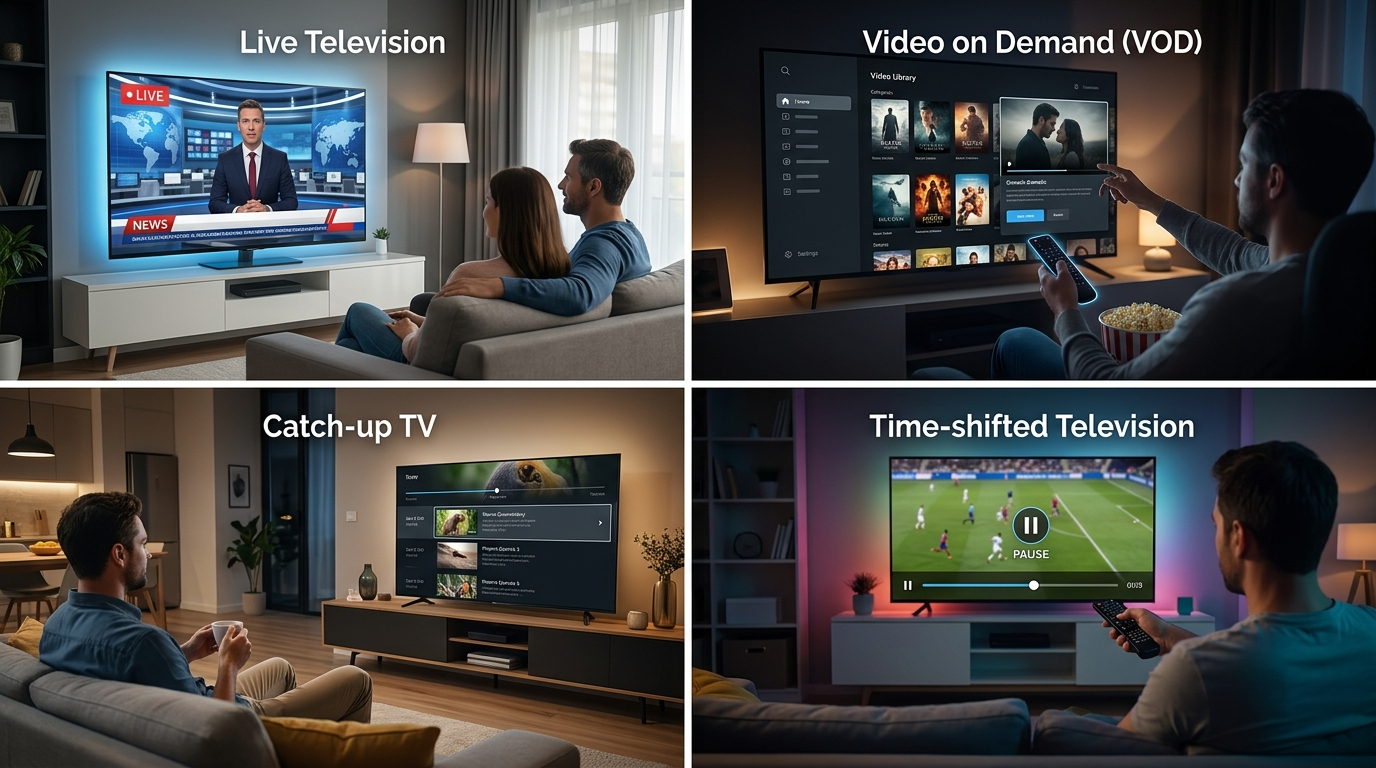
The term “IPTV” can cover several different television delivery and viewing models.
Live IPTV
Live IPTV is the closest equivalent to traditional live television.
Instead of receiving a channel through an antenna, cable connection or satellite dish, the channel is delivered through an IP network.
Examples include live news, entertainment, sports, international television and other linear programming.
For live IPTV, the quality of your experience can depend on factors such as your internet connection, network congestion, device performance and the provider’s infrastructure.
Video on Demand
Video on Demand (VOD) allows viewers to choose individual programs rather than watching whatever happens to be broadcasting at a particular moment.
A VOD library can contain movies, television series, documentaries and other programs.
Instead of waiting for a program to appear on a schedule, you select available content and begin playback when you are ready.
Catch-Up TV
Catch-up television allows viewers to watch programs after their original broadcast time.
This can be useful if you missed a live program but still want to watch it later.
Availability and retention periods vary between providers and content owners.
Time-Shifted Television
Time-shifting gives viewers additional control over when they watch television.
Depending on the service, this may include features such as restarting a program already in progress, pausing live television or accessing recently broadcast content.
The exact capabilities depend on the IPTV platform and the rights associated with the content.
What Devices Can You Use for IPTV?
One of the reasons IPTV has become popular is the range of devices capable of accessing IP-based video services.
Depending on the service and application, IPTV can be available on:
- Amazon Fire TV Stick
- Smart TVs
- Android TV devices
- TV boxes
- Smartphones
- Tablets
- Windows PCs
- Mac computers
- MAG devices
- Other compatible streaming hardware
Our Firestick IPTV Subscription service, for example, is designed around multiple supported device types rather than being restricted to a traditional television set.
However, compatibility should always be checked before purchasing a subscription. An IPTV service may support one platform while having limited support for another.
IPTV on Firestick
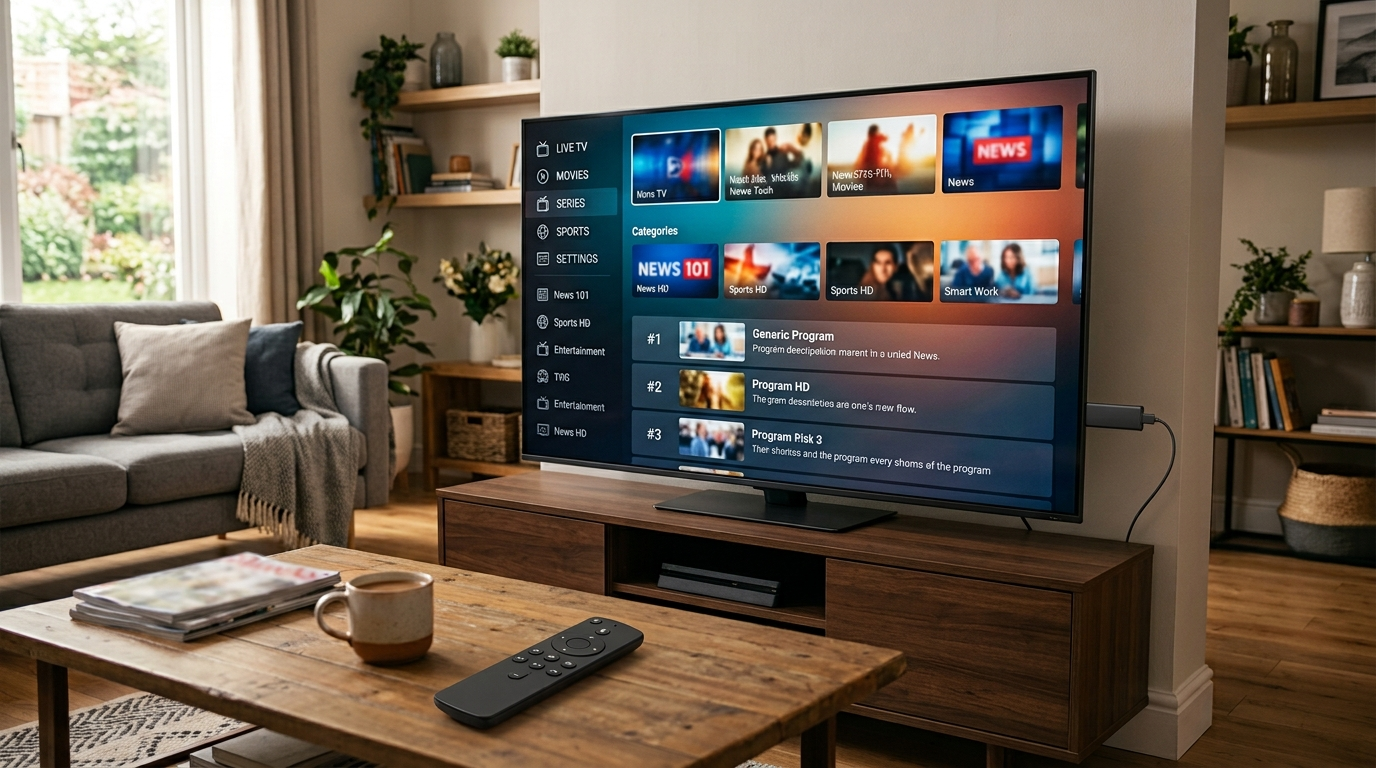
Amazon Fire TV Stick devices are commonly used for streaming because they connect directly to a television and provide access to streaming applications.
Using IPTV on a Firestick generally involves:
- Connecting the Firestick to your television.
- Connecting the Firestick to a reliable Wi-Fi or wired network.
- Installing a compatible IPTV application where permitted.
- Entering the credentials or playlist information supplied by your IPTV provider.
- Loading available channels or content.
- Selecting a program to watch.
The precise installation process depends on the application and IPTV service you use.
Before purchasing an IPTV subscription, check that the provider supports your particular Firestick model and the application you intend to use.
How Fast Does Your Internet Need to Be for IPTV?
Your required internet speed depends on the resolution of the video, the number of devices using your connection and the quality of the stream.
Higher-resolution video generally requires more bandwidth than standard-definition video.
As a practical rule, a stable broadband connection is more important than simply having a high advertised download speed. A connection can be fast but still produce a poor streaming experience if it suffers from instability, congestion, packet loss or high latency.
For example, if several people are simultaneously streaming, gaming and downloading large files, your IPTV stream may compete for available bandwidth.
For the best experience:
- Use a stable broadband connection.
- Place your Wi-Fi router in a suitable location.
- Consider Ethernet where practical.
- Avoid unnecessary downloads while watching live television.
- Keep your streaming device and application updated.
- Test your connection if you experience repeated buffering.
IPTV systems can use different delivery architectures and protocols, so there is no single internet-speed requirement that applies to every IPTV service.
IPTV vs Cable TV
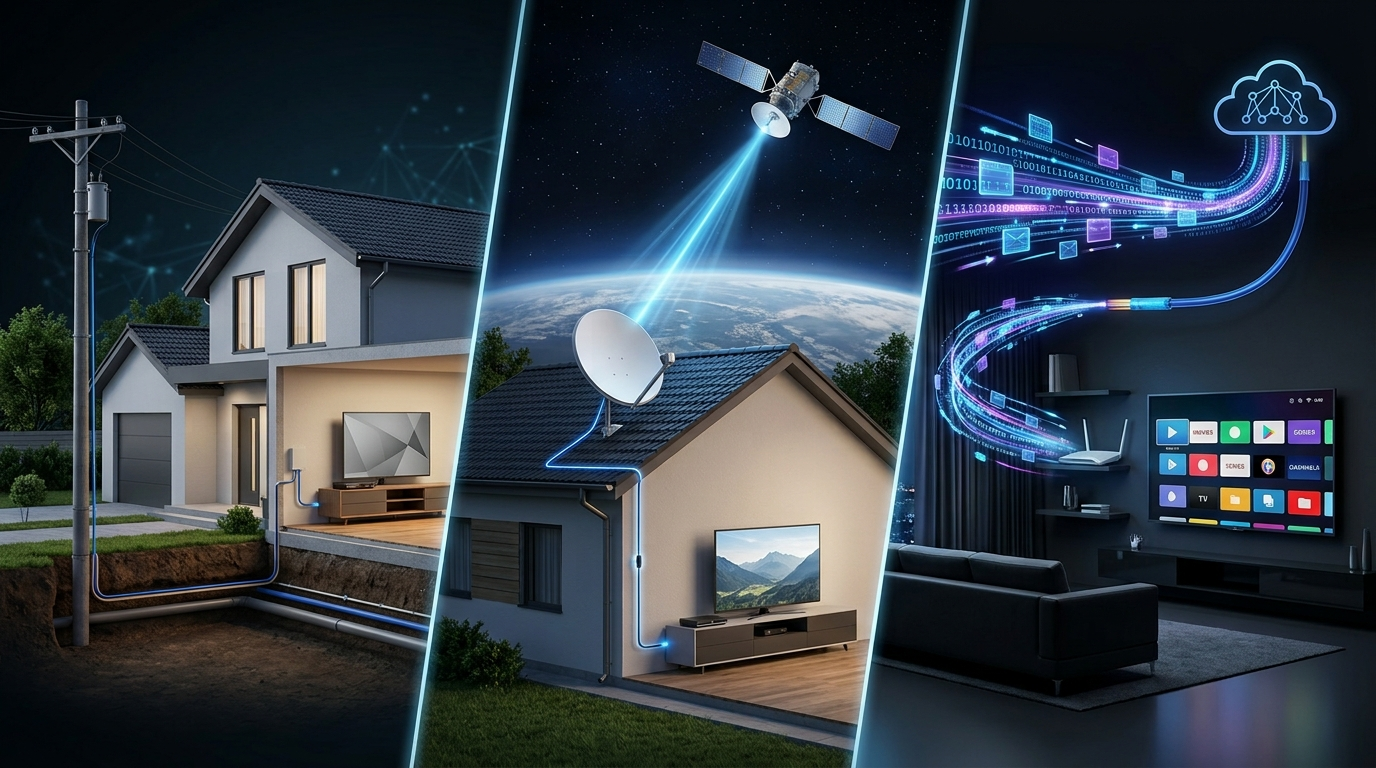
The biggest difference between IPTV and cable television is the delivery method.
Cable television traditionally uses a dedicated cable infrastructure to deliver television programming to subscribers.
IPTV uses IP networking to transport the television content.
IPTV advantages compared with cable
IPTV can provide:
- Greater flexibility in supported devices
- On-demand viewing
- Interactive features
- Internet-based access
- Potentially easier access to international programming
- Integration with other digital services
Cable television may still offer advantages in certain locations, particularly where providers operate highly reliable infrastructure and customers want a conventional managed television package.
The best option depends on the availability, pricing, reliability and content offered in your area.
IPTV vs Satellite TV
Satellite television uses signals transmitted from satellites to a receiving dish.
IPTV instead uses IP networks.
Satellite can be particularly useful in locations where broadband infrastructure is limited. IPTV, on the other hand, can be more convenient for households that already have a reliable broadband connection and want television delivered through connected devices.
Weather, infrastructure, content availability and regional service coverage can all influence which option makes the most sense.
IPTV vs OTT: What’s the Difference?
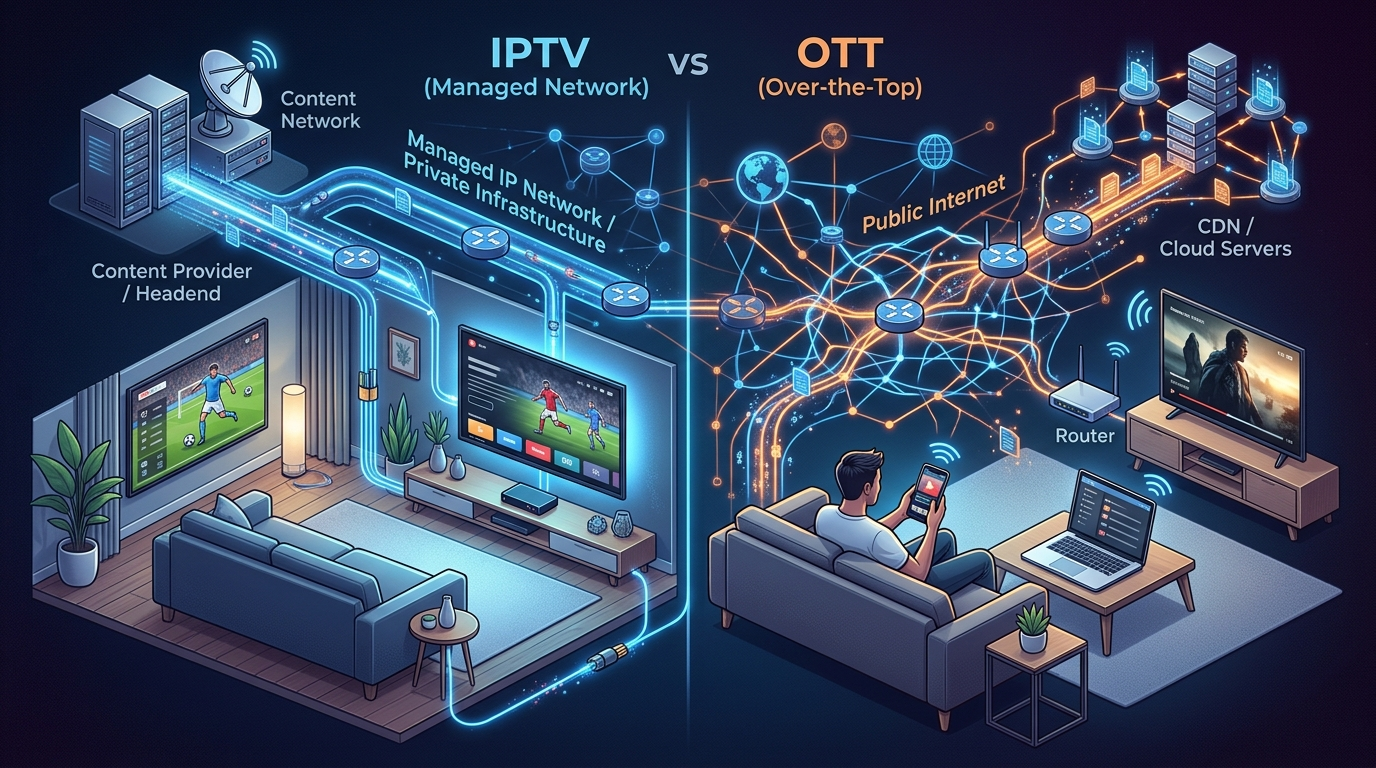
IPTV and OTT are often used interchangeably, but they are not technically identical.
OTT means Over-the-Top and generally describes video or other content delivered over the internet without the traditional managed television distribution infrastructure associated with many IPTV systems.
IPTV commonly refers to television services delivered through managed IP networks, particularly in telecommunications environments. The FCC has distinguished IPTV from general internet-based video by describing IPTV as an operator-led approach to delivering television using IP as the transport platform.
In simple terms:
| IPTV | OTT |
|---|---|
| Often associated with managed IP networks | Usually delivered through the public internet |
| Can provide live television | Can provide live and on-demand content |
| Commonly associated with telecom/TV providers | Commonly associated with internet streaming platforms |
| May use dedicated network infrastructure | Generally uses ordinary internet access |
| Can support interactive TV features | Often focused on streaming applications |
There can be overlap, however, and the terminology is sometimes used differently by companies and consumers.
What Are the Benefits of IPTV?
IPTV offers several potential advantages over traditional television delivery.
More flexible viewing
IPTV can allow users to access television through different connected devices rather than being tied to a single traditional television receiver.
Live and on-demand content
A well-designed IPTV service can combine live channels with VOD and catch-up functionality.
Interactive features
Because IPTV uses IP networking, providers can support interactive features such as electronic program guides, time shifting and other digital services.
Device flexibility
Depending on provider support, you may be able to use IPTV on a Firestick, smart TV, computer, smartphone or another compatible device.
International programming
IP-based delivery can make it easier for providers to organize television packages containing programming from multiple regions.
Potentially simpler hardware
For people who already have a compatible smart TV or streaming device, IPTV can eliminate the need for some traditional television hardware.
What Are the Disadvantages of IPTV?
IPTV is not perfect, and it is important to understand its limitations before choosing a service.
Your internet connection matters.
Unlike traditional terrestrial television, IPTV depends on an IP network. If your broadband connection is unstable, the viewing experience can suffer.
Buffering can occur.
Buffering may result from network congestion, insufficient bandwidth, Wi-Fi problems, overloaded infrastructure or issues on the provider’s side.
Device compatibility varies.
Not every IPTV application works on every television or streaming device.
Service quality differs between providers
Two IPTV services can offer completely different levels of reliability, support, content availability and streaming quality.
Content rights matter.
IPTV technology itself is not automatically legal or illegal. The important question is whether the provider has the appropriate rights or permissions to distribute the content it offers.
That distinction is particularly important when evaluating inexpensive IPTV subscriptions.
Is IPTV Legal?
IPTV technology is legal.
The legal question concerns the particular service, provider and content being distributed.
There are legitimate IPTV services operated by telecommunications companies, broadcasters and other authorized providers. Regulators such as Ofcom recognize IPTV as a method through which television channels can be delivered over the internet.
However, not every service using IPTV technology necessarily has permission to distribute every channel, movie or sporting event it advertises.
Before subscribing, consumers should consider:
- Who operates the service?
- Does the provider clearly identify its business?
- What content rights does the service have?
- Is there transparent pricing?
- Is customer support available?
- Are terms and policies clearly stated?
- Does the provider explain where its content comes from?
If you are considering an IPTV subscription, do not assume that a large channel list automatically means that every piece of content is licensed.
How to Choose an IPTV Service
Choosing an IPTV service should involve more than comparing the number of channels advertised.
A huge channel count can look attractive, but reliability, content quality, compatibility and customer support are often more important.
Check device compatibility.
Make sure the service works with the device you actually intend to use.
If you primarily watch television through a Firestick, check Firestick compatibility before subscribing.
Look for transparent pricing.
A trustworthy provider should make its pricing easy to understand.
You can compare available plans through our IPTV pricing plans before deciding which subscription period suits you.
Consider streaming quality.
Look for information about supported resolutions and streaming quality, but remember that advertised resolution does not guarantee identical performance for every user.
Your internet connection, device, Wi-Fi environment and provider infrastructure all influence the final viewing experience.
Evaluate customer support.
Good customer support can be especially important when setting up an IPTV service for the first time.
Look for clear contact information and support options rather than relying solely on an anonymous sales page.
Check the terms and policies.
Before purchasing, review the provider’s terms, refund policy, privacy information and any relevant service conditions.
Avoid unrealistic promises.
Be cautious of websites making extraordinary claims about unlimited content, perfect uptime or guaranteed access to every premium channel worldwide.
A useful IPTV service should provide clear information rather than relying entirely on exaggerated marketing.
IPTV Subscription: What Does It Include?
An IPTV subscription typically provides access to a defined collection of television channels, video-on-demand content or both.
The exact package varies considerably.
A subscription may include categories such as
- Live television
- Sports
- News
- Movies
- TV series
- Children’s programming
- International channels
- Catch-up content
- Electronic program guides
Some services provide different subscription periods, such as monthly, quarterly, six-month, annual or longer plans.
For example, our website currently presents several subscription periods and highlights features such as live channels, movies and TV shows, catch-up functionality, TV guides and multi-device compatibility.
Always check the current plan details before purchasing because channel availability, pricing and supported features can change.
IPTV and Streaming Quality
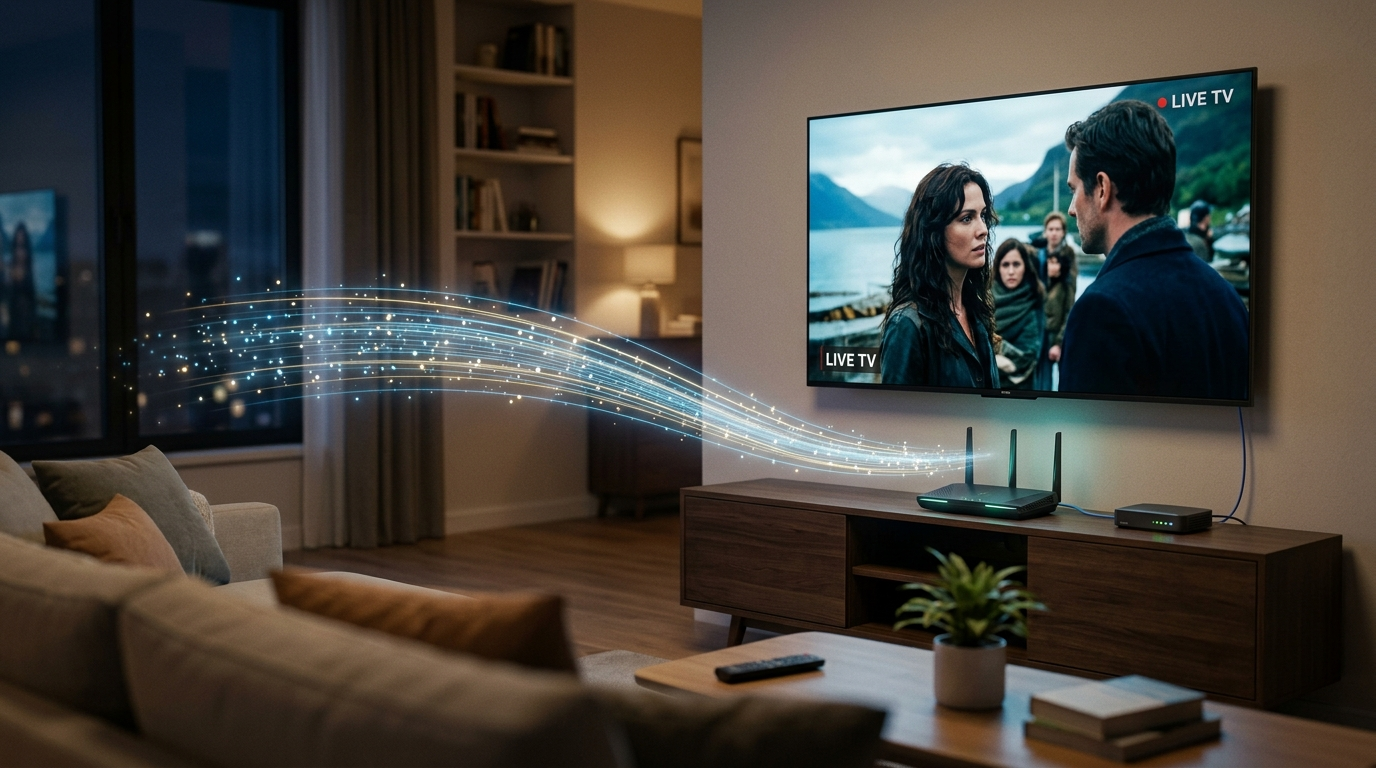
When people complain about IPTV buffering, the problem is not necessarily the IPTV technology itself.
Streaming performance depends on several interconnected factors.
Your home network
A weak Wi-Fi signal can cause interruptions even when your broadband package appears fast enough.
Internet congestion
Peak-time congestion can reduce available bandwidth.
Provider infrastructure
The IPTV provider’s servers, network capacity and streaming architecture can affect performance.
Device performance
Older or underpowered hardware may struggle with demanding high-resolution streams.
Video resolution
4K video generally requires more bandwidth and processing capability than lower-resolution video.
For this reason, choosing a provider based only on advertised channel count or resolution is not enough.
IPTV Features to Look For
If you are comparing IPTV services, consider whether the platform offers the features that matter to you.
Useful features can include:
- Electronic program guide (EPG)
- Catch-up television
- Video on demand
- Multiple language options
- Search
- Favorites
- Parental controls
- Multi-device compatibility
- HD or 4K support
- Customer support
- Reliable account activation
The right feature set depends on how you watch television.
Someone primarily interested in live news may care most about channel reliability, while someone who watches movies may place more importance on VOD organization and playback quality.
Is IPTV Better Than Traditional TV?
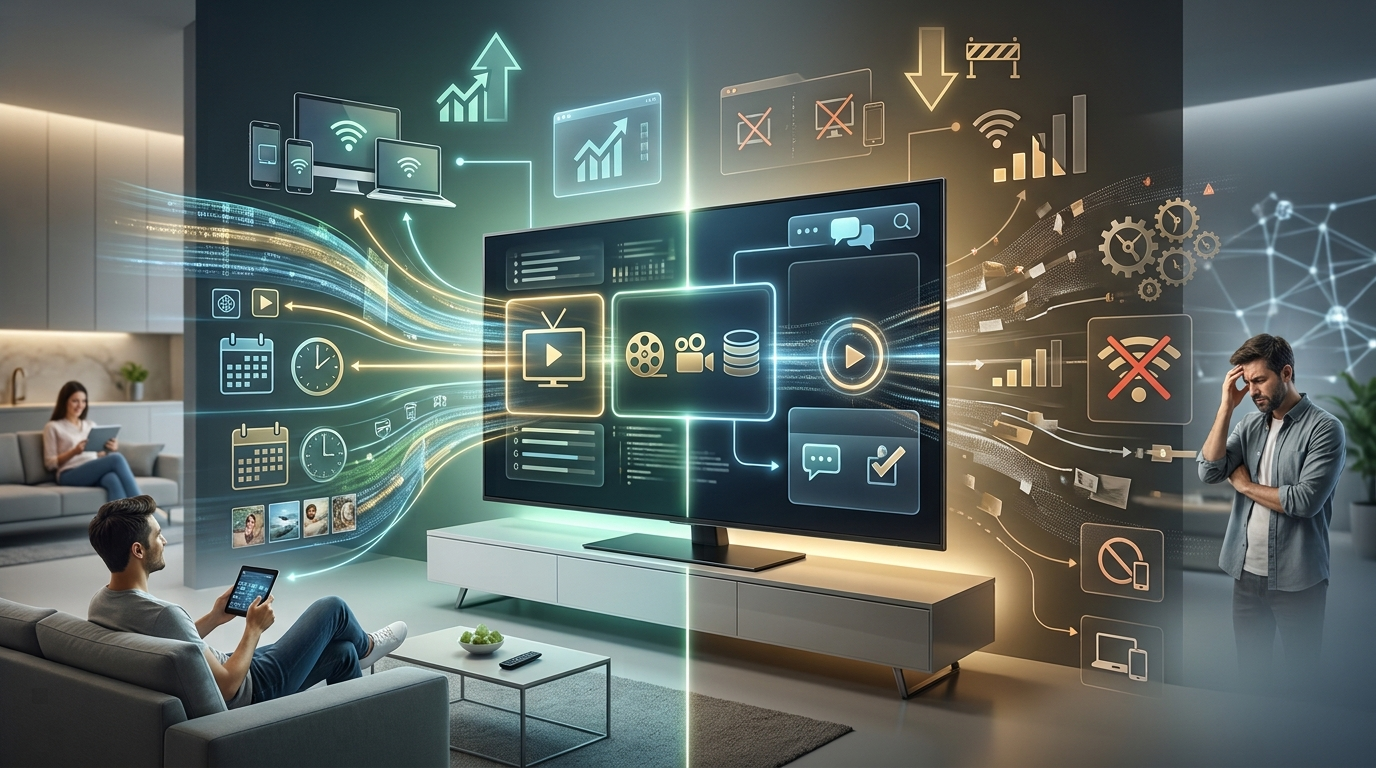
There is no universal answer.
For some households, IPTV offers greater flexibility and a more modern viewing experience. For others, traditional cable, satellite or terrestrial television may remain the simplest and most reliable option.
The main attraction of IPTV is the combination of television content and IP-based technology.
Instead of treating television as a single fixed broadcast signal, IPTV can provide a more interactive environment where live channels, on-demand programming and digital features can coexist.
The best solution ultimately depends on your internet connection, preferred devices, budget, viewing habits and the services available in your region.
The Future of IPTV
Television has progressively moved from fixed broadcast delivery toward more flexible digital consumption.
IPTV is part of that broader shift.
As broadband connections become faster and connected televisions become more common, viewers increasingly expect television services to provide features such as on-demand viewing, catch-up television, personalized recommendations, and multi-device access.
IP-based delivery also allows television services to integrate more closely with other internet-based technologies.
The result is a television environment where the distinction between traditional broadcasting and digital streaming can become less obvious to the viewer.
Frequently Asked Questions About IPTV
What does IPTV stand for?
IPTV stands for Internet Protocol Television. It refers to television and related multimedia services delivered using IP-based networks.
What is IPTV in simple terms?
IPTV is a way of watching television through an IP network instead of receiving television exclusively through traditional terrestrial, cable or satellite transmission.
How does IPTV work?
An IPTV provider prepares video content for digital transmission and sends it through an IP network. Your compatible television, streaming device, computer or mobile device receives and decodes the stream so you can watch it.
Can I watch IPTV on a Firestick?
Yes, IPTV services and compatible IPTV applications can be used on Fire TV Stick devices, provided the particular service and application support your device.
Do I need fast internet for IPTV?
You need a stable broadband connection suitable for the quality of video you want to watch. Higher-resolution streams generally require more bandwidth.
Is IPTV the same as Netflix?
No. Netflix is an OTT streaming platform. IPTV is a broader term describing television delivery over IP networks. IPTV can include live television, VOD and other television services.
Is IPTV legal?
The IPTV technology itself is legal. The legality of a particular IPTV service depends on the provider’s authorization to distribute the content it offers and the laws applicable in the relevant jurisdiction.
Can IPTV replace cable TV?
For some viewers, IPTV can provide an alternative to cable television, particularly where reliable broadband is available. Whether it is a better option depends on content, price, reliability, device compatibility and local availability.
What devices support IPTV?
Depending on the provider, IPTV can work with Firesticks, smart TVs, Android TV devices, computers, smartphones, tablets, MAG devices and other compatible hardware.
What should I look for in an IPTV provider?
Look beyond the advertised channel count. Check device compatibility, pricing, streaming quality, customer support, refund policies, terms, privacy information and the provider’s authorization to distribute its content.
Final Thoughts: What Is IPTV?
So, what is IPTV?
IPTV is a method of delivering television and video content through Internet Protocol networks. Instead of relying solely on traditional broadcast, satellite or cable transmission, IPTV uses IP-based networking to deliver live television, on-demand video and other interactive services.
For viewers, the biggest attraction is flexibility. IPTV can bring live channels and on-demand entertainment to compatible televisions, Firesticks, computers, smartphones and other connected devices.
However, the quality of an IPTV experience depends on more than the technology itself. Your internet connection, device, application, provider infrastructure and content availability all matter.
If you are considering an IPTV subscription, focus on the fundamentals: reliability, compatibility, transparent pricing, customer support and legitimate content distribution.
For readers interested in using IPTV on a Firestick, you can visit the Firestick IPTV Subscription homepage or review the available IPTV pricing plans before making a decision.
The goal should not simply be to find the service advertising the biggest number of channels. Instead, choose a service that provides a clear, reliable and suitable television experience for the way you actually watch content.